
Buying a home is one of life’s most exciting milestones — whether it’s your first purchase or your fifth. But while the experience is rewarding, it can also feel overwhelming at times. Sellers often receive much of the attention during a transaction as they prepare their home for the market, stage the property, and accommodate showings. However, buyers have important responsibilities throughout the process as well.
Understanding what’s expected of you as a buyer can help keep your transaction smooth, organized, and far less stressful. The good news? A skilled real estate agent will guide you through every step of the journey.

1. Get Your Finances in Order Early
Before you begin touring homes, it’s important to understand what you can comfortably afford. Getting pre-approved for a mortgage puts you in a much stronger position when it’s time to make an offer and shows sellers that you’re financially prepared.
Preparing your finances means:
- Understanding your budget
- Having funds ready for your down payment and closing costs
- Providing documentation requested by your lender
If you plan to purchase with cash, sellers will typically request proof of funds. Your financial institution can provide an official letter or account statement to include with your offer.
How Your Agent Helps
A knowledgeable buyer’s agent can connect you with trusted local lenders and mortgage professionals, helping you explore financing options before your home search begins. Your agent can also explain seller credits and other strategies that may help reduce upfront costs.

2. Do Your Due Diligence
House hunting is exciting, and it’s easy to fall in love with a home quickly. However, before submitting an offer, it’s important to take time to evaluate the property and surrounding area carefully whenever possible.
Some important steps may include:
- Researching the neighborhood, schools, commute times, and nearby amenities
- Reviewing public records and permit history for renovated or flipped homes
- Investigating possible liens or unresolved construction issues
- Considering a pre-inspection if the seller allows it
Doing your due diligence can help you avoid costly surprises after closing.
How Your Agent Helps
Your agent can assist with researching public information, recommending reputable inspectors, and coordinating additional evaluations such as pest or structural inspections if needed. They’ll also help you interpret inspection findings and determine whether to negotiate repairs, request credits, adjust your offer, or walk away from the transaction entirely.
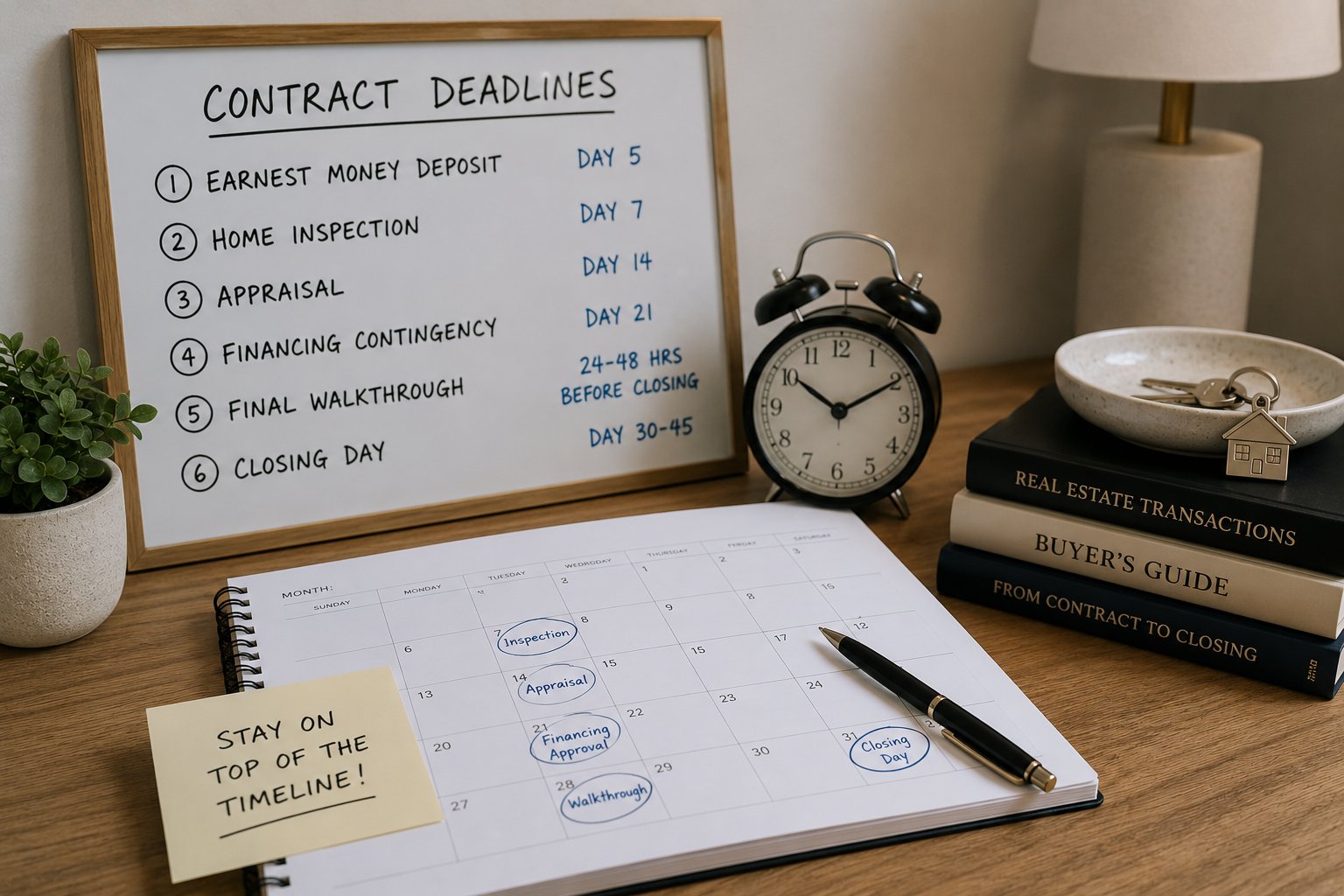
3. Stay on Top of Contract Deadlines
Once your offer is accepted, the timeline moves quickly. Real estate contracts contain critical deadlines, and missing one could put your earnest money deposit — or even the transaction itself — at risk.
Here are some of the key milestones buyers typically encounter during the process:
Earnest Money Deposit
Typically within 5 days of contract ratification
Submit your earnest money deposit to demonstrate good faith and keep the transaction moving forward.
Home Inspection Contingency
Typically within 5–10 days
Schedule and complete inspections, review reports, and negotiate any repair requests or credits if necessary.
Appraisal
Typically within 14 days
Your lender will order an appraisal to confirm the home’s value. If the appraisal comes in low, you may need to renegotiate terms with the seller.
Financing Contingency
Typically within 21 days
Your lender finalizes loan approval so your financing contingency can be satisfied on time.
Final Walkthrough
Typically 24–48 hours before closing
This is your opportunity to confirm the property is in the agreed-upon condition and that any negotiated repairs have been completed.
Closing Day
Typically 30–45 days after offer acceptance
You’ll sign final documents, submit remaining funds, and officially receive the keys to your new home.
How Your Agent Helps
Think of your agent as your transaction manager and advocate. They’ll monitor every deadline, coordinate with lenders and settlement companies, send reminders, and make sure everything stays on track from contract to closing.

4. Communicate Honestly and Promptly
Your lender, agent, and the seller’s team all rely on timely communication throughout the transaction. Responding quickly to requests and being transparent about any financial or personal changes can help prevent delays and avoid unnecessary complications.
Even small changes — such as opening a new credit card, changing jobs, or making a large purchase — can affect your financing during the approval process.
How Your Agent Helps
Your agent serves as your primary guide and point of communication throughout the transaction. They’ll help simplify complex information, explain your options clearly, and ensure you always know what’s needed next so you can move forward confidently.
The Bottom Line
Being a responsible and informed buyer plays a major role in protecting your investment and ensuring a successful transaction. While the home buying process can feel complex at times, you don’t have to navigate it alone.
Your real estate agent is there to guide you, advocate for your best interests, and help keep every detail organized from the first showing to the final signature. By staying engaged, responsive, and informed, you’ll be well-positioned for a smoother and more rewarding home buying experience.
Thinking About Buying a Home?
Whether you’re a first-time buyer or preparing for your next move, having the right guidance can make all the difference. Connect with Liz Rihani to start building a strategy that fits your goals and lifestyle.